
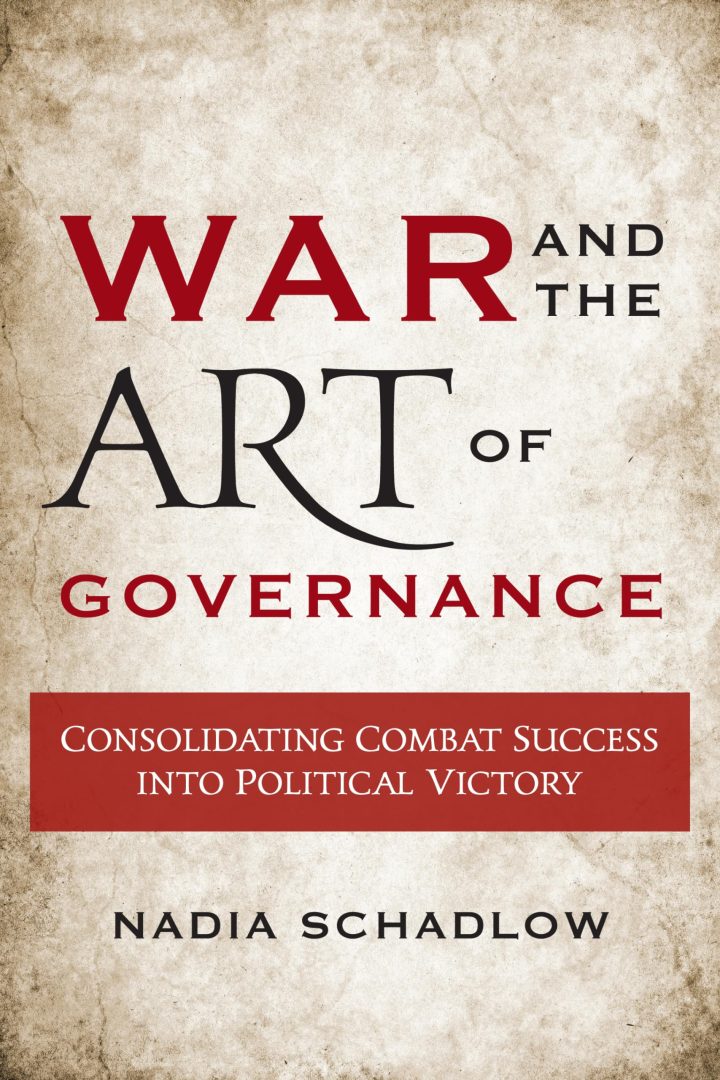
If war is the continuation of politics by other means, a central issue is how to consolidate combat success by achieving the war’s intended political outcome. As Nadia Schadlow shows, this means establishing a post-conflict political order—governance—over the territory contested in the conflict. This truth was long understood by leaders of historic empires. However, through a series of case studies, this book documents that U.S. decision-makers have continually resisted this imperative, to the detriment of their ability to consolidate gains won by force of arms. The author documents that American leaders often deny the fact that post-conflict governance is a fundamental part of war and that the U.S. military is the only organization that has the scale and capacity to establish political order immediately after hostilities. Any aspiring strategist who seeks to influence decisions on the use of armed force, particularly to support regime change, should read this book.
Guiding Questions
- How does a military government in occupied territory translate into satisfying the political aims of the conflict?
- What is the balance the U.S. must play between retaining a territory under military occupation and granting self-rule under local civilian authorities?