
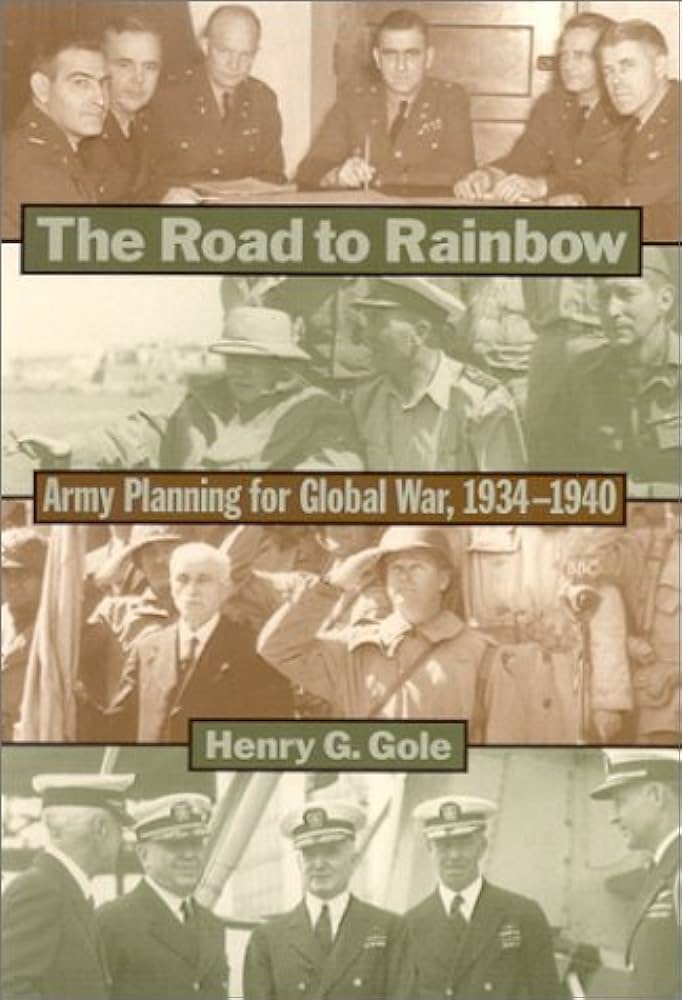
Implementation benefits from the existence of advance scenario-based planning. President Eisenhower famously said, “Plans are worthless, but planning is everything.” He meant that specific military plans developed in peacetime were only partially relevant to the actual realities when war broke out but that the process of advance planning would generate operational solutions that could be readily adapted to respond to military challenges. This book by Henry Gole shows the value of such planning in the lead up to World War II. At that time, the Army War College served as a planning organization to the War Department. It developed a set of “color plans”—contingency war plans for various scenarios—designed to support force planning and provide 1.0 war plans. Each contingency plan was code named with a different color. Though many were irrelevant to later events—plan Crimson was for a war centered on Canada—the evolution of plans to fight Japan (Orange) and Germany (Black) enabled vital advance planning and evolved into “rainbow” plans involving friendly and hostile coalitions. These contingency plans accelerated the process of mobilizing forces and developing campaign plans when the United States intervened in World War II. This book shows the power of scenario-based planning in the military domain. However, this method has broader applicability and is underutilized in the U.S. system. An aspiring strategist should learn to use these techniques, which can be used to improve the policymaking by “prepositioning” knowledge, analysis, and policy development.
Guiding Questions
- What lessons does the book give about planning for possible future contingencies?
- How does the Army War College give its students opportunities to lead?