


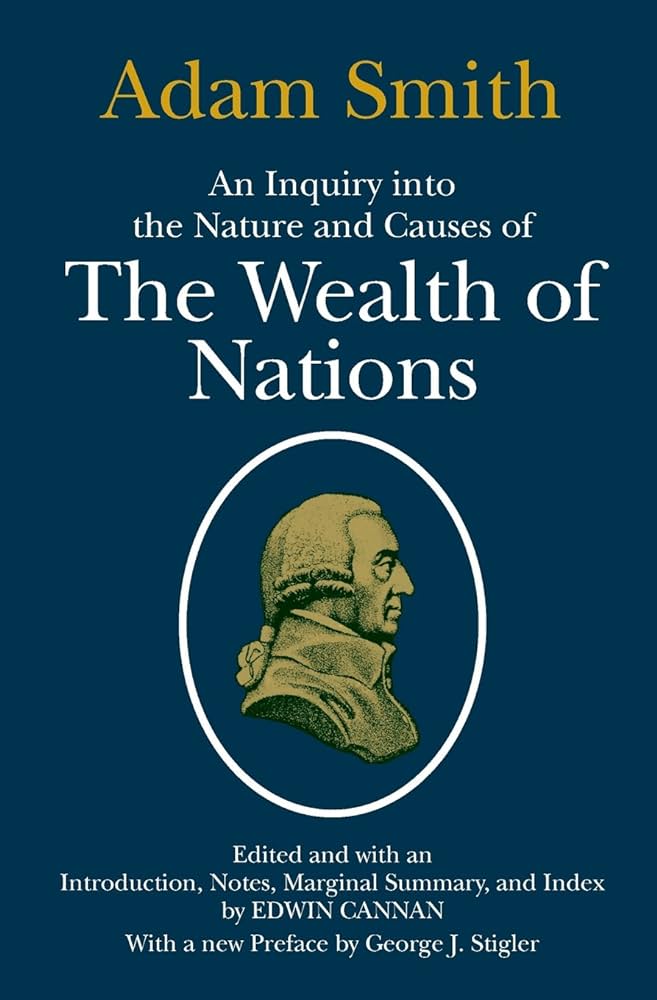
In his foundational book on economics, Adam Smith articulates the mechanisms by which wealth expands through market-driven processes and competitive forces. Central to his argument is the concept of the “invisible hand,” a process through which individuals in a market system pursue self interest and, as a byproduct, coordinate resource allocation to the benefit of the rest of society. He explores how the division of labor multiplies productivity and transforms simple tasks into complex manufacturing systems. He challenges mercantilist ideas that equate wealth with accumulated bullion. Instead, he posits that real wealth derives from the capacity to produce goods and services, enhanced by specialization and exchange. International trade, far from being a zero-sum game, is shown to generate mutual gains. The work alternates between concise propositions and dense theoretical expositions that demand attentive reading. However, it is a classic in illuminating the sources of wealth that are a requirement for achieving great power status.
Guiding Questions
- How do division of labor, free markets, and competition play in increasing national wealth and productivity?
- Does this paradigm apply to regimes of varying populations, economies, and natural resources?