
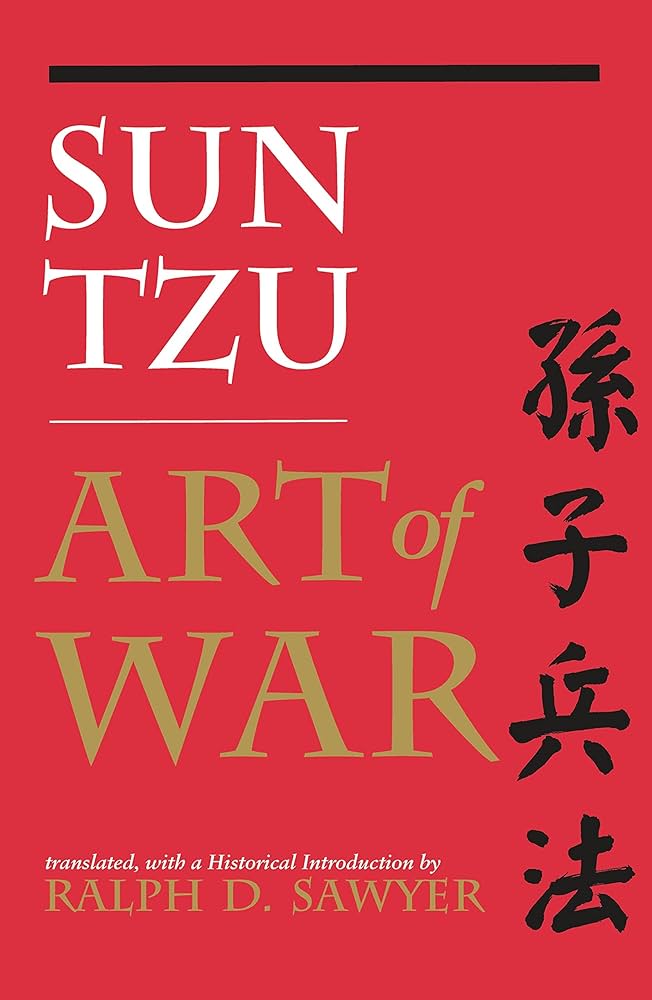
Written more than two thousand years ago, this classic in military attributed to Sun Tzu is one of the leading original texts to understand Chinese strategic culture. It covers the fundamental factors and elements that govern strategy, operations, and tactics; how to assess strong and weak points of an adversary; and the use of maneuver, deception, exploitation of terrain, variation in tactics, and intelligence operations. The book is famous for several axioms such as “what is of extreme importance in war is to attack the enemy’s strategy.” Another focuses on gaining a positional advantage in peace time that leads an opponent to capitulate preemptively: “For to win one hundred victories is not the acme of skill. To subdue the enemy without fighting is the acme of skill.” This book, like On War, introduces the value of looking to ancient or historical texts to find timeless insights into strategy.
Guiding Questions
- How "timeless" are the lessons of the Art of War? If Sun Tzu had a chance to reexamine his lessons in the context of modern warfare, would he change anything?
- Why do we engage with ancient authors like Sun Tzu? What pros and cons do we face when doing so, especially when attempting to understand our adversaries?