


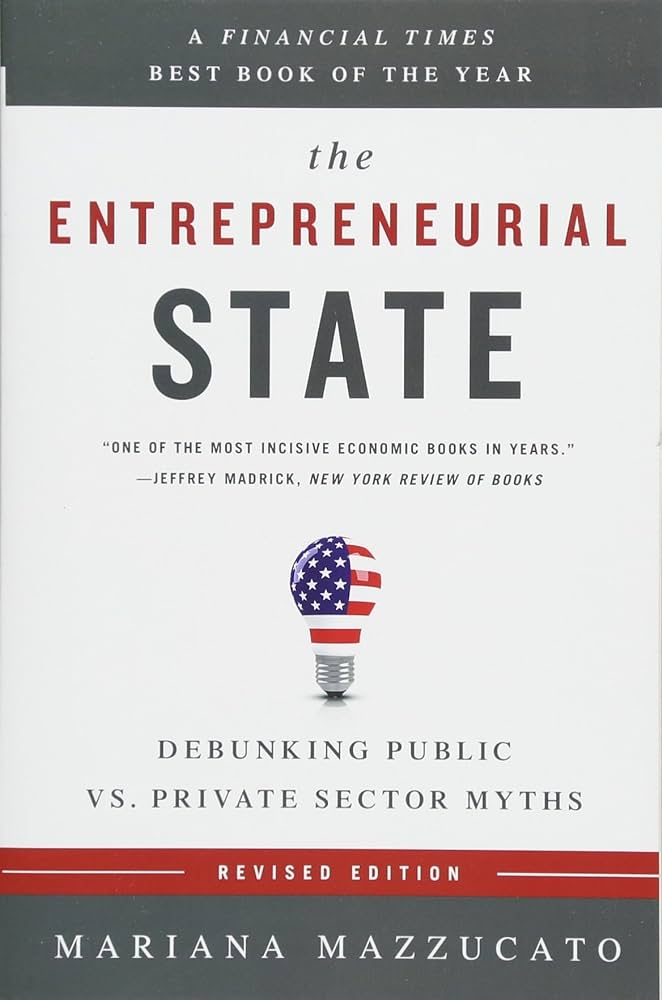
A great power must be able to do big things. It must have a capacity for mobilization and innovation to be on the frontier of science and technology. Mariana Mazzucato argues that the United States has attained this capacity through a system that combines government and private-sector institutions. She argues that some of its most far-reaching innovations, including the microchip, the Internet, the Global Positioning System, and touch-screen displays, were developed in whole or in part through U.S. government research programs and then harnessed or commercialized by the private sector. In her view, we should not view the government as a reactive entity that simply regulates in response to market failures but rather should seek to use the “entrepreneurial state” to catalyze technological revolutions that foster prosperity and enable the United States to out compete its adversaries.
Guiding Questions
- What is the optimal balance between state and private innovation? Does this vary per sector? What about national security concerns such as IP theft?
- What concrete policies should be implemented to better develop the relationship between the entrepreneurial state and society? What about human intellectual capital? Has the U.S. government recently prioritized this framework of innovation?