
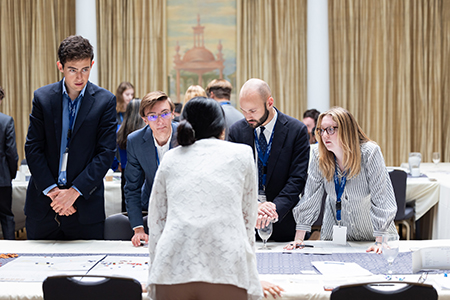
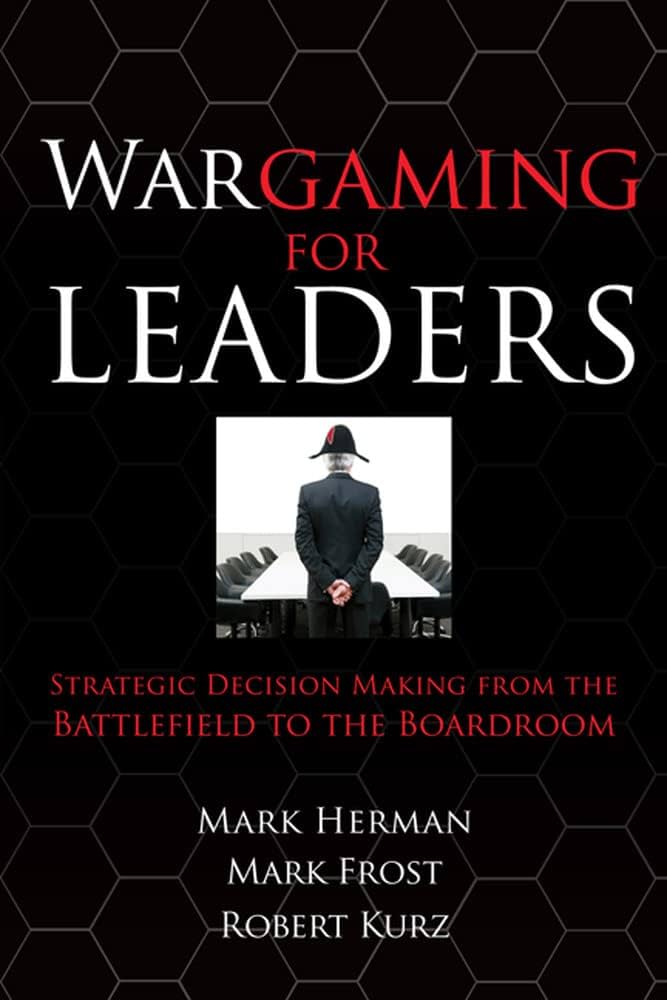
Wargaming is not about predicting the future but rather about preparing for it. In implementing strategy, the outcomes are also shaped by the actions of opponents. As the classic line puts it, “The enemy gets a vote.” The authors, all of whom are experienced practitioners of wargaming in the policy world, make the case that wargaming can sharpen strategic development and implementation by opening the aperture on how competitions with adversaries might unfold. Wargaming involves running detailed simulations of an imagined future related to a concrete policy challenge that gives participants a chance to react and respond to situations in a risk-free environment. In the U.S. policy context, it typically involves a team representing the United States, a team or teams playing the role of adversaries and allies, and a control group that provides information to all the players, communicates moves as the occur, and adjudicates outcomes based on extensive subject matter knowledge and the rules of the game. Wargaming often confronts a team with unexpected moves or outcomes. As the authors write, “One thing a person cannot do, no matter how rigorous his analysis or heroic his imagination, is to draw up a list of things that would never occur to him.” While not perfect, wargaming can give one a better chance at making that list a little shorter.
Guiding Questions
- What makes a good wargame? What makes a good wargame player?
- In what scenarios should wargaming be employed? What are the obstacles to using wargaming to inform day-to-day decision-making?