


Hamiltonian Journal
The 2006 Lebanon War: Lessons for Counterterrorism
Share On:
In 2006, Israel embarked on a military campaign against Hezbollah, confident that its technological and military superiority would secure victory and deter further harassment along its border. However, the operation quickly took unexpected turns, revealing that Israel’s leadership had placed too much faith in unreliable assumptions. Despite adopting a new doctrine drawn from America’s successes in the early 1990s against Iraq and in Bosnia and Kosovo that relied on strategic air power and precision firepower, Israel still faced significant challenges, leading to a conflict far different from what it had envisioned. What went wrong, and what lessons can be drawn from this failure?
Five key factors contributed to Israel’s struggle: a flawed strategy, poor leadership, underperforming ground forces, aversion to casualties, and domestic backlash. The 2006 campaign showed that technological and military superiority alone does not guarantee success in counterterrorism operations. Examining alternative strategies-targeting the Lebanese government, launching an initial large ground operation, or adopting a diplomatic approach focused on containment-suggests that they may not have led to more success, offering a rebuttal to critics that pushed for either a “tougher” or a “more diplomatic” approach.
A comprehensive analysis of Israel’s 2006 campaign against Hezbollah serves as a valuable case study for modern counterterrorism strategies. The terrorist groups of today are exploiting Western democracies’ aversion to casualties and leveraging social media to instill fear and expand their operations, which points to the need for developing tailored, non-kinetic strategies rather than rigid responses based solely on military or diplomatic means.
Background
Although all militant groups in Lebanon were disarmed after the Taif Agreement following the 1975-1990 Civil War, the Shia terrorist group Hezbollah was allowed to operate as a resistance force against Israeli operations in southern Lebanon because of its role in opposing Israeli occupation and its strong support among the Lebanese Shia population. Lebanese outrage grew over Israel’s continued occupation of the Shebaa Farms since the June 1967 War, a dispute that became a proxy for deeper tensions and mistrust between the two sides. [1] These tensions steadily escalated as both sides engaged in limited border operations throughout the early 2000s.
The 2006 Lebanon War was triggered by Hezbollah’s July 12 operation in which three Israeli soldiers were killed and two were kidnapped. [2] Secretary-General Hassan Nasrallah did not anticipate that the July 12 kidnapping would provoke Israel into a larger war, as Hezbollah had previously carried out similar operations such as when three soldiers were kidnapped along the border on October 7, 2000. [3] Yet after facing repeated provocations, Israel sought to restore its deterrence credibility, leading to the escalation of the 2006 kidnapping incident into a full-scale conflict.
Israeli Prime Minister Ehud Olmert was determined to deter Hezbollah and punish the group for kidnapping Israeli soldiers. He feared that its current practice of hostage exchanges would diminish deterrence and embolden Hezbollah. [4] Israel’s operation sought to cut off Hezbollah’s command and control infrastructure, suppress rocket attacks into Israel, and minimize ground casualties, relying on airpower to isolate Hezbollah on the battlefield. [5] Approximately 15,000 troops participated in the ground offensive, with 117 to 119 soldiers and 37 civilians killed. [6]
The Israel Defense Force (IDF) embraced the Revolution in Military Affairs (RMA) that started at the beginning of the twentyfirst century, which leveraged “technology as a way of avoiding friendly casualties in land warfare, particularly in urban combat situations.” [7] The RMA led to the development of Effects-Based Operations (EBO), rooted in the belief that technology in the Information Age would “allow a military force to destroy a specific portion of its enemy with incredible precision.” [8] Israeli doctrine relied on the EBO approach and brought with it a new set of terminology and methodology shaped by the United States’ experience during the 1990-1991 Iraq War and the mid1990s Bosnia and Kosovo campaigns. Drawing from America’s victory, Israeli proponents of EBO concluded that airpower dominance could deliver success and argued that the IDF could rely on airpower to defeat Hezbollah.
Factors Behind Israel’s Struggle Against Hezbollah
Israel developed an intrinsically flawed strategy that placed excessive reliance on airpower and standoff attacks. Israeli leaders showed “excessive faith” in standoff attacks without significant ground action and underinvested in conventional ground capabilities. [9] Israeli intelligence suggested as early as July 15, 2006, that “air power alone could not accomplish the mission.” [10] This assessment was disregarded, with Israeli leaders instead relying on the success of air operations in the 1990-91 Iraq War as a model. In response, Hezbollah simply constructed underground infrastructure and fortified its defenses to counter Israeli airstrikes.
The Israeli campaign failed not because the Israeli Air Force (IAF) underperformed but because Israeli leadership expected too much from the IAF. The Winograd Commission, created to examine the 2006 Lebanese War’s aftermath, found that the IAF executed successful operations against Hezbollah’s medium- and long-range missiles but not against short-range rockets and its command-and-control infrastructure. [11] Proponents of EBO assumed that precision targeting could isolate and destroy enemy units. But by not also destroying Hezbollah’s command and control infrastructure, Israel’s war objectives failed. Even after realizing that airpower was insufficient, the Israeli military made little adjustments.
Israel also faced poor leadership, as commanders failed to align their ends, ways, and means. The Winograd Commission found that Prime Minister Olmert had exercised poor leadership by thrusting the nation “into a major war without first thinking [through] the war and its implication.” [12] Despite IAF’s success against mid-to-long-range rockets, its leadership oversold its capabilities to clear Hezbollah’s resistance, promising success if given just one more day and then another. [13] Military leaders should have reevaluated their goals after Israeli intelligence revealed that reliance on airpower alone was not enough. The disconnect between objectives and capabilities highlighted Israel’s irresponsible decisions, driven by an unrealistic understanding of the operational and tactical environment.
Israeli leaders also engaged in combat without preparation and without setting clear military objectives. The 2006 Battle of Bint Jbyal from July 23 to July 29 led to “eight IDF soldiers killed and twenty-seven wounded, [because of] unclear military objectives and unclear gains.” [14] General Halutz also admitted to being unprepared to call up reserves and acknowledged that “they should have been called up” even if there was not an initial need. [15] The later reserve call-up was also “lagging some 24-48 hours behind the deployment of reserve forces.” [16] Despite Israeli leaders’ insistence that it successfully eliminated many enemy leaders, Israel “at no point during the war [killed] any major Hezbollah political figure.” [17] Israel’s poor leadership at the various command levels was an important factor that contributed to its failed campaign.
Furthermore, Israeli ground forces lacked preparation, received poor training, and did not have the material to sustain operations. The IDF developed operational concepts and capabilities to combat Palestinian terrorism during the Second Intifada. [18] However, Hezbollah employed greater lethality and a blend of conventional and guerrilla tactics. Israel underestimated Hezbollah’s $250 million USD cash flow and a more conventional combat capability that included “fixed training bases, well-trained artillerymen, rocket-launching facilities, and the use of advanced communications.” [19] Without a clear understanding of its adversary, the IDF was caught off guard.
Some IDF commanders above the brigade level had gone years without training their units. In some cases, paratroopers had never fired a light antitank weapon, and one paratrooper platoon had two light antitank weapons per thirty people. [20] Not every IDF officer had “the time or the inclination to study” the EBO doctrine’s terminology and methodology. [21] The new doctrine was confusing for those who did, and officers did not have sufficient time to incorporate it throughout their command. In the end, the IDF’s reputation as a formidable military power suffered in the eyes of Middle Eastern powers.
The Israeli operations against Hezbollah also failed because of Israel’s social and military cultures being averse to casualties. Israel’s democratic system of governance played a role in fostering casualty aversion, as the “cultural and social climate reduced the legitimacy of sacrifice, thereby giving rise to casualty aversion.” [22] In democracies, higher casualties in war can rapidly erode public support for a conflict. This is especially true in an economically prosperous country like Israel, which in 2006 was facing a far less threatening geopolitical environment compared to the 1967 Six-Day War when it fought against an Arab coalition including Egypt, Syria, and Jordan. Hezbollah’s firing of Katyusha rockets into Israeli territory, coupled with the IDF’s lack of effective countermeasures, further intensified fears among Israelis who were not used to experiencing direct fire. As the conflict devolved into a war of attrition, Hezbollah capitalized on this dynamic, strategically exploiting the Israeli population’s growing fatigue and eroding resilience to secure a psychological and political advantage.
The IDF’s strategic and operational planning was also affected by its aversion to casualties. Israel’s reliance on airpower was a political decision, treating ground forces as a “last resort.” [23] The pace of the Israeli operation was indecisive, caught between avoiding a ground
operation or considering a broader ground maneuver. [24] IDF’s aversion to casualties was juxtaposed with Hezbollah fighters willing to sacrifice their lives using suicide bombings. Nasrallah’s “spiderweb” theory proved accurate, as rising Israeli casualties ultimately pressured the IDF to halt the conflict.
The Israeli population’s aversion to casualties contributed to another key factor in Israel’s unsuccessful campaign: the shift in both domestic and international public opinion against the IDF’s war efforts. Hezbollah used media propaganda to instill fear among the Israeli population. Nasrallah released videos showcasing a dramatic moment: with “perfect theatrical timing,” an explosion on the horizon rocked the INS Hanit, an Israeli naval vessel struck by an Iranian-produced C802 Noor guided missile. [25] Although Hezbollah staged the attack and the ship’s anti-missile defenses were turned off, Israeli witnesses were horrified, especially as Hezbollah showed no signs of relenting.
Hezbollah strategically positioned key assets within civilian areas, leveraging public opinion to gain political advantage by accusing Israel of targeting innocent civilians. Israel agreed to a 48-hour ceasefire following the Qana bombing, which targeted community centers and killed 28 civilians. [26] Pressure from the international community partly motivated this decision. Israeli media critical of the IDF’s war efforts also helped turn international public opinion. Israeli state-owned television condemned the IDF for its “idiotic military maneuvers,” and Israeli print media attacked the IDF with such scathing commentary as “Was there a proper decision-making process? No goals attained.” [27] Such media criticism reinforced the perception that the IDF’s military operations were ineffective and that the country should halt its military efforts.
Israel’s Alternative Courses of Action
Instead of relying on air power and precision standoff attacks, the IDF could have carried out a large land maneuver, targeted Lebanon’s proWestern government, and pursued a diplomatic strategy containing the Hezbollah threat.
Israel could have carried out a large land maneuver using several IDF mechanized divisions to clear Hezbollah’s tunnel infrastructure and its ground forces. Such a direct military approach would bring “the cognitive collapse” Halutz so desperately sought.
Israeli General Amos Yadlin argued that Israel should have targeted the infrastructure of the pro-Western government to cast “state responsibility on a country from which the enemy operates.” [29] However, targeting the pro Western government would likely backfire, as the international community could turn against Israel and drive the Lebanese people to rally around Hezbollah, further enhancing its legitimacy within the country. Nevertheless, this action would have been significant, as many Israeli commanders, such as General Yadlin, advocated for it and later criticized the government for not pursuing it.
The Winograd Commission found that Israel could have pursued “a policy of containment” and reduced the Hezbollah threat through diplomatic and military maneuvers. [30] Israel could have used the international community to pressure the Hezbollah leadership to return Israeli hostages. The counterargument is that this would reduce the scope of Israel’s initial objectives of long-term deterrence to merely containing the threat, with no guarantee that Hezbollah would agree to negotiate. A diplomatic approach could also embolden the group to make further demands on Israel, potentially reinforcing the perception that terrorist tactics are effective.
Supporting U.S.-Israeli Counterterrorism Efforts in the Middle East Today
Applying the factors behind Israel’s struggle to current U.S.-Israeli counterterrorism cooperation can offer several insights. First, the United States should support Israel targeting terrorist centers of gravity through the appropriate means. Instead of disparate and disconnected efforts, Israel should maintain direct targeting of terrorist leadership and critical assets. Israel has done this in recent strikes against Hezbollah, but this strategy must be continued and employed against other terrorist groups. The United States should work closely with Israel to provide a wide array of options for conducting counterterrorism operations so that it does not make the same errors as in its 2006 campaign against Hezbollah.
Moreover, under the leadership of current Prime Minister Benjamin Netanyahu, Israel has made significant strides in strengthening its leadership. But Israeli leaders remain under constant pressure during crises. The United States should avoid openly criticizing Israeli policies, which would undermine Israeli unity and benefit terrorists who seek to turn public opinion against Israel. Instead, criticisms should be communicated through back channels, ensuring that the United States and Israel remain aligned in their efforts. Both countries must also be realistic about what they promise their populations, so drastic setbacks will not easily crumble civilian support.
The United States and Israel should also increase cooperation through interagency dialogues, intelligence sharing, rocket defense measures, and the latest counterterrorism tactics. U.S. leaders should continue building upon the two countries’ strong security partnership. Drawing on Israel’s experience combating Middle Eastern terrorist groups can also offer the United States insights into its efforts.
Both nations’ reluctance to accept casualties puts pressure on political leaders to end conflicts quickly when faced with losses. Terrorist groups increasingly exploit Western democracies’ aversion to casualties, and this trend is likely to continue, especially in the age of social media. Not publicly undermining leaders can help, but both nations should also encourage a resilient population that understands the threats that terrorism can pose. Against Hezbollah, Israel “ignored the political and informational aspects” of the conflict. [31] The United States and Israel should work together to garner support from allies to prevent terrorists from establishing safe havens. Gaining international backing to disrupt terrorist groups’ financial networks makes it more difficult for them to fund and sustain their operations.
Conclusion
Several lessons remain relevant for counterterrorism operations today based on the five factors that contributed to Israel’s struggle against Hezbollah. The side with technological and military superiority does not always win; it must tailor its operations against its specific enemy to achieve success. Accurate intelligence, good leadership, adequate preparation, and a sound strategy are still very important. There is also the danger of over-relying on any weapon against the enemy. Diversifying available means is especially beneficial in the context of counterterrorism. Going forward, the non-kinetic aspects of any counterterrorism campaign will play a more critical role than ever before. Countries must therefore ensure that terrorist groups do not undermine public opinion to gain leverage.
Kevin Zhang ’25 served as an Officer at the AHS chapter at Georgetown University, where he earned an M.A. in Security Studies and a B.S. in Foreign Service.
Notes:
[1] Asher Kaufman, “Who Owns the Shebaa Farms? Chronicle of a Territorial Dispute,” Middle East Journal 56, no. 4 (2002), 577
[2] Raphael D. Marcus, Israel’s Long War with Hezbollah (Washington, DC: Georgetown University Press, 2018), 95
[3] Marcus, 95
[4] Marcus, 98
[5] Augustus Richard Norton, Hezbollah:A Short History (Princeton, NJ: Princeton University Press, 2014), 137
[6] Anthony H Cordesman, George Sullivan, and William D. Sullivan, Lessons of the 2006 Israeli-Hezbollah War (Washington, DC: Center for Strategic and International Studies, 2007), 5
[7] Benjamin S. Lambeth, Air Operations in Israel’s War Against Hezbollah: Learning from Lebanon and Getting It Right in Gaza, (Santa Monica, CA: RAND Corporation, 2011), 211, https://www.rand.org/pubs/monographs/MG835.html
[8] Matt M. Matthews, We Were Caught Unprepared: The 2006 Hezbollah-Israeli War (Fort Leavenworth, KS: Combat Studies Institute Press, 2012), 23
[9] Lambeth, Air Operations in Israel’s War, 200
[10] Matthews, We Were Caught Unprepared, 38
[11] Lambeth, Air Operations in Israel’s War, 203
[12] Lambeth, 200
[13] Mark Perry and Alastair Crooke, “How Hezbollah Defeated Israel: Winning the Ground War,” The Asia Times, October 13, 2006, https://www.conflictsforum.org/2006/how-hezbollah-defeated-israel-2/
[14] Lambeth, Air Operations in Israel’s War, 196
[15] Marcus, Israel’s Long War, 192
[16] Perry and Crooke, “How Hezbollah Defeated Israel: Winning the Ground War”
[17] Perry and Crooke, “How Hezbollah Defeated Israel: Winning the Ground War”
[18] David E Johnson, “The Second Lebanon War,” Hard Fighting: Israel in Lebanon and Gaza, (Santa Monica, CA: RAND Corporation, 2011), 25, https://www.rand.org/pubs/monographs/MG1085.html
[19] Lambeth, Air Operations in Israel’s War, 213.
[20] Matthews, We Were Caught Unprepared, 23, 49
[21] Matthews, 25
[22] Yagil Levy, “How Casualty Sensitivity Affects Civilian Control: The Israeli Experience.” International Studies Perspectives 12, no. 1 (2011), 74
[23] Marcus, Israel’s Long War, 188
[24] Marcus, 196
[25] Norton, Hezbollah: A Short History, 136
[26] Perry and Crooke, “How Hezbollah Defeated Israel: Winning the Ground War”
[27] Matthews, We Were Caught Unprepared, 47
[28] Matthews, 61
[29] Marcus, Israel’s Long War, 103
[30] Lambeth, Air Operations in Israel’s War, 218
[31] Daniel Byman, A High Price: The Triumphs and Failures of Israeli Counterterrorism, (New York, NY: Oxford University Press, 2013), 261
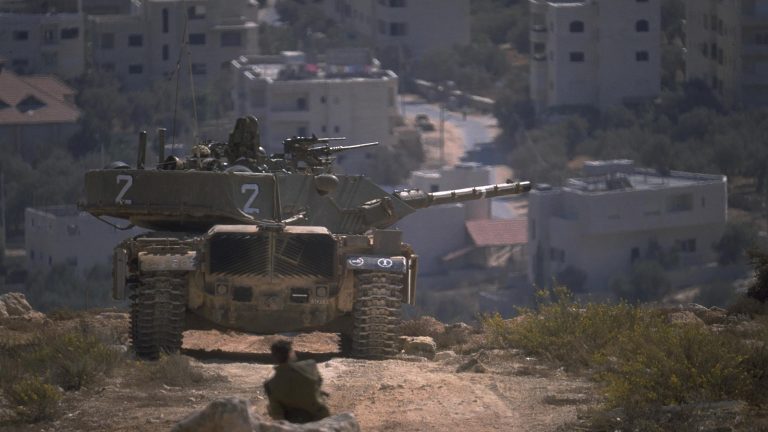
Image: “IDF FORCES POSITIONED IN “GILO” NEIGHBORHOOD IN JERUSALEM, FOLLOWING FIRE ON THE NEIGHBORHOOD FROM “BEIT JALLA” IN THE PALESTINIAN AUTHORITY,” by Bamahane, retrieved from https://commons.wikimedia.org/wiki/File:Tanks_in_Gilo.jpg. This file is licensed under the Creative Commons Attribution-Share Alike 3.0 Unported license.