
Hamiltonian Journal
The Battlefield’s Boundaries: Upholding the Law of War in Modern Conflict
Share On:
Although the nature of war may never change, the laws of warfare certainly do. The modern laws of war have existed for nearly a century, but conflicts in recent years have shown that the current system is ineffectual. This is a problem for U.S. national security. The law of war, also known as international humanitarian law (IHL), provides a framework for determining what actions are permissible during armed conflicts and emphasizes the minimization of civilian casualties. [1] After the first treaty codifying IHL was adopted during the First Geneva Convention in 1864, nation-states historically adhered to IHL statutes. [2] In recent years, however, regard for the law of war has declined. This has led to greater civilian suffering and negative consequences for the United States and the international order. The United States must therefore refocus on the law of war.
Though its origins lie in the distant past, the law of war was internationally codified through the 1949 Geneva Conventions. These treaties outline acceptable conduct in war as well as how civilians, prisoners of war (POWs), and soldiers removed from the battlefield should be treated. [3] The law of war rests on five foundational principles: military necessity, humanity, proportionality, distinction, and honor. [4] Military necessity permits only those actions that contribute directly to weakening the enemy’s military capacity. [5] Humanity places limits on the means and methods of warfare to mitigate the harshness of military necessity. [6] Proportionality prohibits attacks if the result may cause excessive incidental harm to civilians in relation to the anticipated military advantage, while distinction requires actors to differentiate between combatants and civilians and between military and protected. [7] Finally, the principle of honor calls for a baseline of fairness and mutual respect between opposing forces — encouraging restraint and discouraging tactics that exploit an adversary’s compliance with IHL. [8]
Of these five principles, proportionality is one of the most often violated tenets in ongoing conflicts. In certain cases, active combatants and their commanders are the only parties in a conflict that assess an attack for proportionality concerns before launching it, which can lead to breaches of international law when it is unilaterally determined that the military advantage to be gained is more important than the loss of civilian life. To be compliant with IHL’s proportionality statute, combatants must conduct diligent pre-attack assessments that weigh the foreseeable civilian harm against the expected military advantage based on the knowledge available to them before the initiation of an attack. [9] Once an attack gets the green light, the attacking party should provide precautionary warnings for civilians when possible and exercise adaptability during operations based on the conditions on the ground.
To ensure that combatants and commanders respect the principle of proportionality and IHL in general on the battlefields of the future, the United States should leverage its position as a global leader to create and encourage higher standards for education, observation, and enforcement of IHL.
The Threat Environment
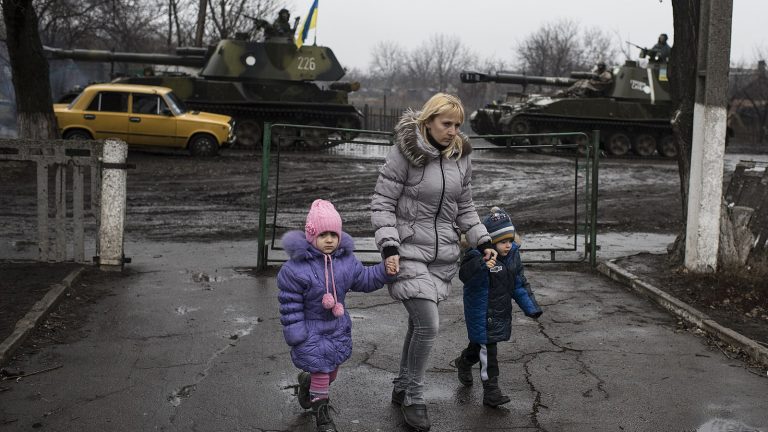
From indiscriminate attacks to the use of cluster munitions to unlawful treatment of POWs, Russia has committed many crimes under IHL in the streets and fields of Ukraine. Since Russia launched its full-scale invasion in February 2022, the United Nations (UN) has recorded over 28,000 civilian casualties. [10] Russia has repeatedly denied relief organizations access to Ukrainian POWs, preventing the delivery of essential supplies and review of both internment conditions. [11] There have also been systematic attacks targeting civilian infrastructure. A single missile strike on a Ukrainian cafe killed at least 59 people, and additional attacks targeting the Ukrainian energy gridcaused widespread blackouts. [12] There is also evidence suggesting that Russia has struck clearly marked ambulances and bombed civilian hospitals. [13] Russia has failed to abide by the principle of distinction and continues to carry out attacks that target civilians and protected groups.
Although it is the object of Russia’s invasion, Ukraine is also still bound by IHL. There have been instances during the conflict where Ukraine has not fully adhered to the law of war during the conflict. For example, one unit of Ukrainian forces beat and non-fatally shot Russian prisoners early in the war, violating the Geneva Convention’s requirements for the treatment of POWs. [14] Notably, former Ukrainian Armed Forces Commander Valerii Zaluzhnyi publicly rebuked this action, showcasing that, although it follows Geneva Convention directives imperfectly, Ukraine recognizes the importance of adhering to these rules. [15]
The war between Israel and Hamas has also showcased violations of the law of war. The most blatant and devastating of these violations came on October 7, 2023, when Hamas murdered around 1,200 individuals and abducted hundreds of civilians in the largest massacre of Jews since the Holocaust. [16] In this instance and countless others, Hamas did not and does not abide by the principle of distinction. The law of armed conflict dictates both that civilians may not be used to shield military assets, and military resources may not be installed in civilian areas. [17] Despite these clear parameters, Hamas commonly uses human shields by firing rockets, artillery, and mortars from or near heavily populated civilian areas; locating defensive positions within civilian areas; and using civilians for intelligence-gathering missions. [18] Hamas’s use of over 19,000 unguided rockets against Israel in the first year of the current war, which Hamas launched with little to no distinction between civilian and military targets, also violates the Geneva Conventions. [19] Far beyond the actions of one terrorist organization, the Islamic Republic of Iran also shares the blame for Hamas’s repeated war crimes. As one of the primary funders of this terrorist group, Iran’s support has enabled the scale of Hamas’s operations to be what it is. [20] Iranian financial support for Hamas’s atrocities throughout this conflict renders the state blameworthy as well.
While Hamas has continuously failed to abide by the law of war, Israel’s analysis of the principle of proportionality also raises concerns. This principle states that a military attack should not occur if the expected loss of civilian lives or civilian objects is considered excessive in relation to the direct and concrete military advantage anticipated from the attack. In most cases, Israel’s proportionality assessments are sound. For example, Israel’s strike against Hezbollah leader Hassan Nasrallah, which leveled six apartment buildings and resulted in at least six civilian casualties and 91 injured individuals, still adhered to the principle of proportionality given the impact of eliminating Hezbollah’s top leader. [21] As Israeli Prime Minister Benjamin Netanyahu stated, “[Nasrallah] wasn’t another terrorist. He was the terrorist.” [22] It is also important to recognize that Israel frequently employs tactics like dropping leaflets and roof knockers, low-yield devices that act as warning signals, in civilian areas before launching strikes in an attempt to avoid collateral damage to civilians. [23]
With some Israeli strikes, however, the proportionality assessments have been less clear-cut. For example, Israeli forces struck a tent encampment that the IDF had designated as a humanitarian safe zone, which killed at least 23 civilians and destroyed 21 families’ tents. [24] The goal of the strike was to eliminate senior Hamas militants, which Israel attempted to do using a precision munition; but it remains unclear whether the targeted militants were important enough targets to justify the strike. [25] Israel’s experience with proportionality illustrates the difficulties actors face when attempting to follow the law of war when their adversaries do not.
The People’s Republic of China (PRC) also does not strictly adhere to IHL. One example of this is China’s laser weapons program. In IHL, the use of laser weapons is prohibited when designed to cause permanent blindness to the naked eye. [26] Despite this, China used military-grade lasers to deter Philippine resupply missions in the South China Sea, which temporarily blinded crew members and forced the nation to forego lawful maritime operations. [27] More recently, a Chinese military vessel targeted a German plane lawfully patrolling the Red Sea with a laser, disrupting the aircraft’s mission. [28] Although permanent blindness did not occur in either case, there has been increasing concern about China’s unlawful use of these systems from countries like the United States and Australia. [29-30]
Why The Law of War Matters
As William Tecumseh Sherman is said to have remarked during his March to the Sea in the Civil War, “war is hell.” While no one can escape this fact, the United States should do what it can to make war less hellish, particularly for civilians, through bolstering its effort to observe, enforce, and educate other states on IHL. Following the law of war is critical for the preservation of human dignity, something which the United States cares about like no other superpower in history.
The return of large-scale international armed conflicts in recent years emphasizes the need for strict adherence to the law of war, as the level of carnage possible in today’s total war scenarios reaches an unimaginable scale. The advanced weaponry available today exponentially surpasses the capabilities in the Second World War, which caused an estimated 50-85 million deaths. [31] Simply put, a total disregard for internationally recognized standards of conduct on the modern battlefield could lead to incalculable loss.
Universal adherence to the law of war is also important to U.S. national security. One key reason the United States follows these principles is that doing so allows the country to claim the moral high ground essential to an open democracy. [32] The United States also benefits when other nations comply with these rules, as the law of war helps to preserve international order the United States created and reduce unnecessary human suffering, which is both a moral good and a means to further bolster the rules-based order. Adhering to the law of war also boosts the efficacy of diplomatic efforts and strengthens relationships with the United States’ allies by reaffirming shared values and a common ethical framework for decision-making. When the United States champions these principles, it both gains greater moral authority to lead the world and strengthens global cooperation and commitment to these values that bind nations together.
Towards a Solution
Although respect for IHL has waned in recent years, there are three ways to rebuild: international education and training, International Committee of the Red Cross (ICRC) involvement, and enhanced U.S. leadership.
Education on IHL rules and enforcement should become a global priority. Integrating IHL into public campaigns through international organizations and advocating for legal frameworks that promote accountability for violations of the law of war are two potential remedies to expand awareness of these rules. The four main Geneva Conventions treaties of 1949 have been universally ratified; promoting accountability for violations outlined in these treaties by publicy shaming offenders in the highest international fora could help deter future war crimes. The United States and its allies should also more heavily emphasize IHL principles in military training exercises to promote a culture of IHL compliance.
The United States should also buttress the ICRC as an international leader and champion of IHL rules and enforcement. While the ICRC’s efficacy in the Israel-Hamas conflict leaves much to be desired, it remains the best existing organization to advocate for IHL due to its historical position as a leader in the development of the law of war and the promotion of humanitarian norms. Aiding the ICRC would also entail a further pivot away from the International Criminal Court (ICC). This would align with U.S. interests given that the ICC, which is tasked with investigating war crimes, has both targeted U.S. allies and been criticized for being inefficient, biased, and ineffective. [33] On the other hand, the ICRC has proven effective and committed to promoting compliance with IHL, as evidenced by it winning the Nobel Peace Prize three times since its founding. [34] With greater U.S. support, the ICRC, in addition to continuing its important work in combat zones, could teach IHL at leading undergraduate universities and law schools across the world to reach the next generation of military and geopolitical decision-makers. [35] Promoting the ICRC over the ICC would thus not only help U.S. allies but also provide a more effective alternative to the world for upholding IHL.
As the global leader, the United States should also leverage its geopolitical power to ensure awareness of and adherence to IHL. With the Trump administration’s focus on international trade, U.S. policymakers should establish new economic sanctions targeting nations that frequently violate the law of war to deter the worst perpetrators of war crimes and discourage tolerance of such behavior. The United States should also seek support from allies to enhance international messaging and potentially join in on sanctions against nations committing war crimes.
Though far from simple, there is a real opportunity to improve international adherence to the law of war. As the most powerful state in human history, the United States should lead this charge. Through U.S.-led education, training, and ICRC action, the international community must recommit to the law of war before the horrors of total war return — this time in a world of artificial intelligence and nuclear weapons.
McKenzie Arata ’28 is a member of the AHS chapter at Texas A&M University, where she is pursuing a Master of Legal Studies and a Juris Doctor. She earned a B.A. in Political Science from Baylor University, where she served as an AHS chapter officer.
Notes:
[1] “The Laws of War in a Nutshell,” The International Committee of the Red Cross, October 19, 2016, https://www.icrc.org/en/document/what-are-rules-of-war-Geneva-Conventions
[2] Elchin Mamedov, “What Are the Origins of International Humanitarian Law?” ICRC blog, July 7, 2017, https://blogs.icrc.org/ilot/2017/08/07/origins-international-humanitarian-law/#:~:text=The%20Swiss%20government%2C%20at%20the,the%20birth%20of%20modern%20IHL
[3] “Geneva Conventions and Their Additional Protocols,” LII / Legal Information Institute, accessed November 19, 2024, https://www.law.cornell.edu/wex/geneva_conventions_and_their_additional_protocols
[4] “Law of War Manual,” U.S. Department of Defense, June 2015, updated July 2023, 50, https://media.defense.gov/2023/Jul/31/2003271432/-1/-1/0/DOD-LAW-OF-WAR-MANUAL-JUNE-2015-UPDATED-JULY%202023.PDF
[5] “Military Necessity | How Does Law Protect in War? – Online Casebook,” The International Committee of the Red Cross, accessed May 6, 2025, https://casebook.icrc.org/a_to_z/glossary/military-necessity
[6] “The Principles of Humanity and Necessity,” The International Committee of the Red Cross, March 2023, https://www.icrc.org/sites/default/files/wysiwyg/war-and-law/02_humanity_and_necessity-0.pdf
[7] “Law of War Manual,” U.S. Department of Defense, 60-62
[8] “Law of War Manual,” U.S. Department of Defense, 66
[9] “Proportionality | How Does Law Protect in War? – Online Casebook,” The International Committee of the Red Cross, accessed May 31, 2025, https://casebook.icrc.org/a_to_z/glossary/proportionality
[10] “Human Rights in Ukraine,” Amnesty International, accessed November 19, 2024, https://www.amnesty.org/en/location/europe-and-central-asia/eastern-europe-and-central-asia/ukraine/report-ukraine/
[11] “Russia-Ukraine: ICRC Ready to Visit All Prisoners of War but Access Must Be Granted,” The International Committee of the Red Cross, October 16, 2022, https://www.icrc.org/en/document/russia-ukraine-icrc-ready-visit-all-prisoners-war-access-must-be-granted
[12] “Human Rights in Ukraine,” Amnesty International
[13] Justin MacDonald, “Russian War Abuses in Ukraine: A Lesson in Legitimacy,” War Room – U.S. Army War College, July 21, 2023, https://warroom.armywarcollege.edu/articles/legitimacy/
[14] “Ukraine: Potential Abuse of Prisoners of War Would Constitute a War Crime,” Human Rights Watch, March 31, 2022, https://www.hrw.org/fr/news/2022/03/31/ukraine-des-abus-potentiels-contre-des-prisonniers-de-guerre-constitueraient-un
[15] “Ukraine: Potential Abuse of Prisoners of War Would Constitute a War Crime,” Human Rights Watch.
[16] “Anniversary of October 7th Attack,” U.S. Department of State, accessed November 19, 2024, https://www.state.gov/anniversary-of-october-7th-attack/
[17] “The Law of Armed Conflict: A Guide to International Humanitarian Law,” The International Committee of the Red Cross, last modified 2024, https://www.icrc.org/sites/default/files/external/doc/en/assets/files/other/law3_final.pdf
[18] “Hamas and Human Shields: The Concept of Human Shields in Modern Warfare,” Stratcom Centre of Excellence, last modified 2020, https://stratcomcoe.org/cuploads/pfiles/hamas_human_shields.pdf
[19] Zachary Berman, “19,000 Rockets Launched at Israel Since Hamas’s October 7 Atrocities,” Foundation for Defense of Democracies, June 11, 2024. https://www.fdd.org/analysis/2024/06/11/19000-rockets-launched-at-israel-since-hamass-october-7-atrocities/
[20] “Israel-Hamas War: Iran and Its Proxies,” Israel Policy Forum, accessed December 11, 2024, https://israelpolicyforum.org/israel-hamas-war-iran-and-its-proxies/
[21] Bassem Mroue and Melanie Lidman, “Hezbollah Confirms Its Leader Hassan Nasrallah Was Killed in an Israeli Airstrike,” AP News, September 28, 2024, https://apnews.com/article/lebanon-israel-hezbollah-airstrikes-28-september-2024-c4751957433ff944c4eb06027885a973
[22] Mroue and Lidman, “Hezbollah Confirms Its Leader Hassan Nasrallah Was Killed.”
[23] Michael N. Schmitt, “Israel-Hamas 2023 Symposium — The IDF, Hamas, and the Duty to Warn,” Lieber Institute at West Point, October 27, 2023, https://lieber.westpoint.edu/idf-hamas-duty-to-warn/
[24] “Israeli strikes on a Gaza tent camp kill at least 21 people hospital says,” AP News, December 4, 2024, https://apnews.com/article/israel-palestinians-hamas-gaza-war-news-12-04-2024-efb344dafb1ef0d6d2ec55a17a292ad4
[25] Emmanuel Fabian, “IDF says it targeted Hamas commanders in airstrike on Gaza humanitarian zone that reportedly killed over 20,” The Times of Israel, December 4, 2024, https://www.timesofisrael.com/liveblog_entry/idf-says-it-targeted-hamas-commanders-in-airstrike-on-gaza-humanitarian-zone-that-reportedly-killed-over-20/
[26] “Laser Weapons | How Does Law Protect in War? – Online Casebook,” The International Committee of the Red Cross, accessed November 19, 2024, https://casebook.icrc.org/a_to_z/glossary/laser-weapons
[27] Joel Guinto, “South China Sea: Philippines Says China Used ‘military-Grade’ Laser against Boat,” BBC News, February 13, 2023, https://www.bbc.com/news/world-asia-64621414
[28] Charlotte Van Campenhout, “EU summons Chinese ambassador over laser incident involving German aircraft,” Reuters, July 9, 2025, https://www.reuters.com/world/china/eu-summons-chinese-ambassador-over-laser-incident-involving-german-aircraft-2025-07-09/
[29] Jappy Lim, “Chinese Military’s Blinding Laser Weapons Violate International Agreement,” Futurism, Nov 29, 2016, https://futurism.com/20189
[30] Patrick M. Cronin, “Countering China’s Laser Offensive,” Hudson Institute, April 2, 2020, https://www.hudson.org/national-security-defense/countering-china-s-laser-offensive
[31] “World War II | High Point, NC,” High Point Museum, accessed January 11, 2025, https://www.highpointnc.gov/2111/World-War-II
[32] “‘Laws of War’ Essential for a Free Country to Prevail in a Modern World,” U.S. Air Force, accessed November 20, 2024, https://www.vance.af.mil/News/Commentaries/Display/Article/636896/laws-of-war-essential-for-a-free-country-to-prevail-in-a-modern-world/
[33] Mariel Ferragamo and Claire Klobucista, “The Role of the ICC,” Council on Foreign Relations, March 27, 2025, https://www.cfr.org/backgrounder/role-icc/
[34] “Peace Prize Laureate for the Third Time.” NobelPrize.org, accessed May 6, 2025, https://www.nobelprize.org/prizes/peace/1963/red-cross/facts
[35] “Learning and Teaching IHL | ICRC,” The International Committee of the Red Cross, July 28, 2014, https://www.icrc.org/en/what-we-do/learning-and-teaching-ihl
Image: “Soviet 152.4 mm self-propelled artillery en:2S3 Akatsiya in the background, March, 2015,” by OSCE Special Monitoring Mission to Ukraine, retrieved from https://commons.wikimedia.org/wiki/File:OSCE_SMM_monitoring_the_movement_of_heavy_weaponry_in_eastern_Ukraine_(16731644405).jpg. This file is licensed under the Creative Commons Attribution 2.0 Generic license.